
The Dogs Trust and Cats Protection Jingle Paws collab is one of the most interesting things I’ve seen in fundraising for a while. I like it because I think it tries to tackle a challenge that animal charities have with events fundraising.
It’s been a few years since I worked with either charity, but it’s something I still see with the animal charities we work with today. They massively under-index in terms of income raised through events compared with products like legacies and regular giving. Our work with Open on the Charity Benchmarks showed it, as do many other benchmarking exercises.
I think part of the challenge is the relationship between the person taking part in an event and the people they’re asking to sponsor them. Cancer charities, for example, benefit from a much larger pool of people with a personal connection to the cause, whether through their own experience or that of family and friends. This gives participants a very natural story to tell and makes that sponsorship ask much easier.
Animal charities have huge numbers of passionate supporters, but that connection can be a little more fragmented. Someone might love dogs but have little connection to cats, or vice versa. And while there are plenty of people who love animals, that doesn’t necessarily mean they feel comfortable asking their friends and family to sponsor them in support of an animal charity. It’s possibly why none of the official London Marathon Charity of the Year’s have been animal related. There are already proof points that event fundraising can work for animal charities though. The boom of virtual events during COVID showed that. Think Walk your Socks Off for Guide Dogs or Steps for Pets for Blue Cross. But events for animal charities didn’t push on from that to create those Race for Life of Macmillan Coffee Morning moments.
By bringing Dogs Trust and Cats Protection together, Jingle Paws broadens the appeal of the cause and increases the chances that someone being asked to donate has their own personal affinity with it. It potentially makes that sponsorship ask a much easier one.
I’ve read some of the audience insight that shaped Jingle Paws, but for me, it’s the audience of the audience that makes this particularly interesting. The opportunity to reach beyond the existing supporter base and give people a reason to get involved, bring others along and collectively support a cause they care about. The Enthuse Charity Pulse report highlighted how charities want to make it easy to get people to support the events. “Whatever the cause, charities should consider their audience and the range of fundraising events and activities they put on to be inclusive and appeal to as many supporters as possible”, bringing cats and dogs together does exactly that.
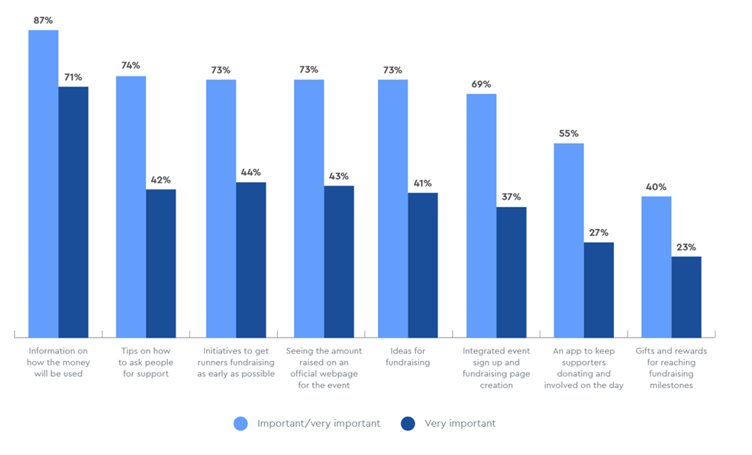
Top ways to help runners maximise fundraising from Enthuse Charity Pulse 2025 Report
There’s also a potentially valuable data opportunity here. Both charities will learn more about the people who engage with the proposition, not just those who participate but the wider network of people they reach through their fundraising. That could provide some really useful insight into audiences they might not otherwise have reached.
I’d also be really interested to see how they manage those ongoing supporter journeys when people move from the joint proposition into the individual worlds of two separate charities. How do you balance the opportunity for both organisations to develop those relationships without overwhelming people with communications and competing asks? Will participants just get all the asks from both charities for the next 12 months?
I think there’s a wider question here about how charities can collaborate to address some of the challenges they face individually. Not just sharing audiences or splitting the cost of an event but bringing together propositions that make it easier for people to engage with and support a cause.
Could children’s charities, for example, work together on a proposition that helps address some of the challenges they face with legacy fundraising? Or could charities with similar audiences but different propositions create something that has a much broader appeal than either could achieve alone?
Anyway, I think it’s interesting, I like it, and I’ll be watching with interest to see what comes out of it.
Author: Andrew Sargent, 2026 © Sequoia-Insights.com